Many people know that the Sanskrit word Ayurveda translates to “the Science of Life” or “the Knowledge of Life.” But what does this really mean in practice, and why has Ayurveda remained relevant for thousands of years?
Through years of study, teaching, and living this wisdom, I’ve come to understand that Ayurveda is far more than a healing system—it is a way of remembering who we truly are.
The Microcosm and the Macrocosm
Ayurveda teaches that the universe (macrocosm) and the individual (microcosm) are deeply interconnected. The same patterns, elements, and energies that shape the cosmos also shape our bodies and minds. This intelligence—subtle, rhythmic, and ever-present—lives within us. Our bodies already know what to do; our role is simply to listen.
This is why Ayurveda places such importance on understanding your Prakriti, your unique constitution made up of the three Doshas—Vata, Pitta, and Kapha. When we understand our Prakriti, we begin to see how the forces of nature express themselves through us.
Ayurveda as a Path of Wholeness
Rather than focusing on “fixing problems,” Ayurveda recognizes the wholeness that already exists within each person. It views the physical body, mind, and spirit as one integrated system. This is true holistic health—not adding more complexity, but returning to simplicity and awareness.
Ayurveda doesn’t teach us anything we don’t already know at a deep level. It reminds us. It brings us home.
Living in Rhythm With Nature
Ayurvedic practices help us align with natural rhythms—daily, seasonal, emotional, and cosmic. When we live in harmony with these rhythms, our Agni (digestive fire) stays strong, our energy remains steady, and our Doshas stay balanced.
This awareness helps us become more self-referential, more attuned to what our body and mind need in each moment. We begin to sense when something is nourishing versus depleting, warming versus cooling, grounding versus destabilizing.
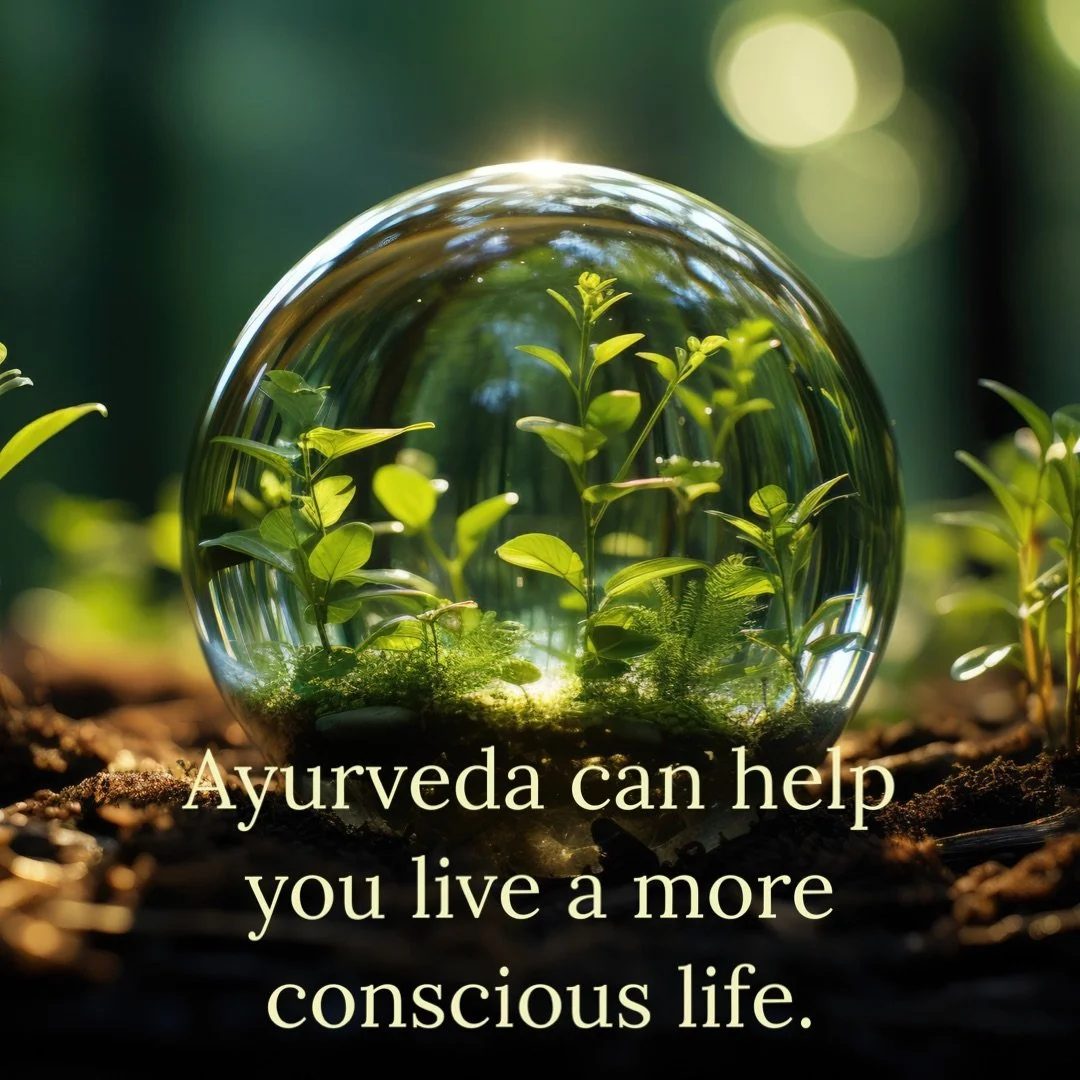
As is within, so is without. The Microcosm reflected in the Macrocosm.
Ayurveda as a Qualia Science
Ayurveda is essentially a science of qualia—the qualities that shape our inner and outer experience. Using the principle of opposites, we can restore balance and prevent Ama (toxins) from accumulating long before disease appears.
This understanding applies to everything:
weather
food
herbs
lifestyle
emotions
sounds
colors
smells
Life thrives when our inner climate is warm, moist, and nourishing—not cold, dry, or harsh. When we learn to recognize qualities, we gain the ability to shift our internal state with simple, intentional choices.
Reconnecting With the Self
Ayurveda teaches that all disease begins with a disconnection from the Self. Practices like meditation, pranayama, yoga, and mindful eating help us reconnect with that inner presence. When we are connected, resilience increases, digestion improves, and life flows more smoothly.
This is Natural Law: when we align with our true nature, nature aligns with us.
Ayurveda Is Not About Rules—It’s About Remembering
Ayurveda is not a rigid set of rules to follow. It is a way of simplifying life, not complicating it. It is not about collecting more information, but about embodying wisdom through lived experience.
When we apply Ayurvedic principles in our modern lives—through food, routine, breath, and awareness—they become part of us. Knowledge becomes wisdom. Wisdom becomes action. Action becomes transformation.
A Journey Back Home
In the end, Ayurveda is a journey back home—to the wholeness that has always been there but may have been forgotten. The realization of Self doesn’t come from searching outside ourselves; it comes from within.
Your body already knows what it needs. When we look to nature, we remember that we are nature. And in that remembering, we return home.
The wisdom of Ayurveda is the wisdom of Life.

The Whole Universe is Humming with me.