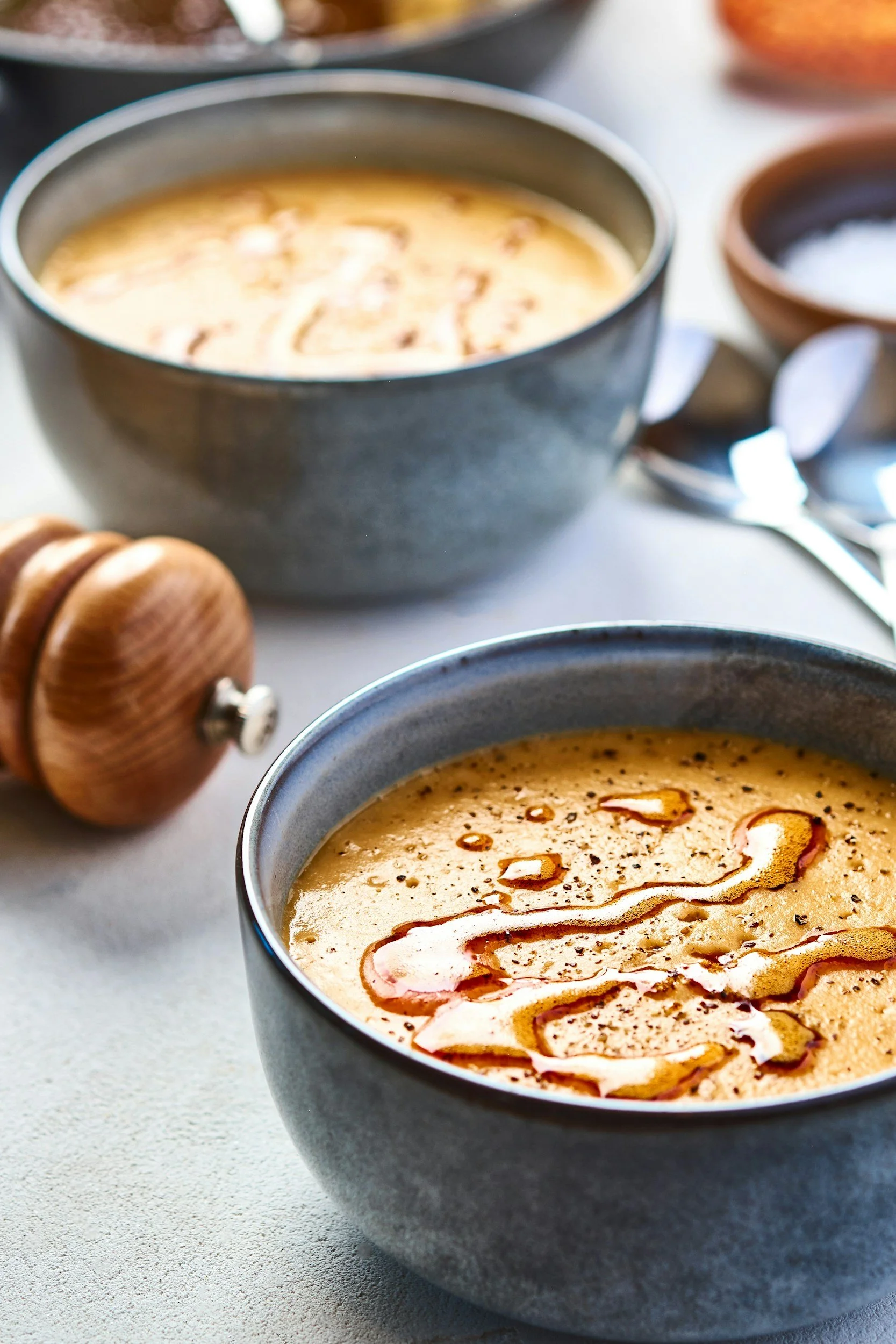
Why Red Lentil Dahl Is Good for You in Ayurveda
Gentle on Digestion
Red lentils (masoor dahl) cook quickly and break down easily, making them one of the lightest and most digestible legumes. Ayurveda classifies them as laghu (light) and sattvic, meaning they nourish the tissues without creating heaviness or digestive strain.
They support Agni (digestive fire) rather than burdening it.
They help reduce gas and bloating compared to heavier beans.
They provide steady energy without sluggishness.
Naturally Balancing for All Doshas
Red lentils are considered tri-doshic when prepared with the right spices.
Vata benefits from their warmth, softness, and grounding qualities.
Pitta is soothed by their mild flavor and cooling post-digestive effect.
Kapha is supported by their lightness and ability to digest easily.
Sattvic Qualities of Red Lentil Dahl
Sattvic foods promote clarity, calmness, and a peaceful mind. Red lentil dahl is considered sattvic because it is:
Pure and simple, made from whole, unprocessed ingredients
Easy to digest, which keeps the mind clear and steady
Nourishing without overstimulation, supporting emotional balance
Warm and grounding, which helps stabilize the nervous system
When cooked with gentle spices like turmeric, cumin, coriander, and ginger, the dish becomes even more sattvic—supporting clarity, compassion, and inner steadiness.
Seasonal Energetics for Fall and Winter
Fall and Winter are dominated by Vata (dry, cold, mobile) and, in deep winter, Kapha (cold, heavy, damp). Red lentil dahl aligns beautifully with the needs of both seasons.
Why It’s Ideal for Fall (Vata Season)
Warm, soft, and moist—counteracting dryness and cold
Grounding and stabilizing for the nervous system
Spices kindle digestion, which tends to weaken in windy, erratic seasons
Provides comfort and nourishment without heaviness
Why It’s Ideal for Winter (Vata + Kapha Season)
Warmth and spices keep Agni strong during colder months
Lightness prevents Kapha accumulation (sluggishness, congestion)
Protein-rich but still easy to digest
Can be enriched with ghee for deeper nourishment when needed
The Deeper Ayurvedic View
Red lentil dahl is more than a soup—it’s a therapeutic food. It supports the body’s natural rhythms, strengthens digestion, calms the mind, and provides grounding warmth during the seasons when we need it most. Its sattvic nature makes it a perfect daily staple for cultivating clarity, steadiness, and emotional balance.
Coconut Red Lentil Dal Soup
Gentle on Digestion
Red lentils (masoor dahl) cook quickly and break down easily, making them one of the lightest and most digestible legumes.
Ingredients
- 2 tablespoons sesame oil (use coconut oil for Pitta)
- 1/4 teaspoon each of whole fennel, coriander, and cumin seed
- 1/8 teaspoon freshly ground black pepper
- 1 can of Coconut milk
- 1/2 teaspoon turmeric
- 2 cups split red lentils, soaked overnight
- 7 cups water or vegetable stock
- 2 large carrotts, chopped
- 4 kale leaves, stemmed and chopped
- 1/2 cup chopped beets (omit for Pitta imbalances)
- Fresh ginger (1 to 2 inch cube), peeled and finely minced
- 1 lime
- Chopped cilantro, for garnish
- Ghee for individual servings
- 3/4 teaspoon sea salt or pink Himalayan salt
Instructions
- Heat a large sauce pan or soup pot over medium heat and add in the sesame oil. Once hot, add in the fennel, coriander, cumin, and black pepper and sauté for 2 to 3 minutes, stirring frequently. Add in the coconut and turmeric and continue to sauté for 1 minute stirring constantly.
- Add the water (or broth) in the same pan and bring to a boil. Once boiling, add the soaked red lentils (discard the water used for soaking) and stir. Reduce the heat to low-medium and cover the pan, leaving a slight opening to prevent the risk of overflow. Cook here for 10 minutes, stirring half way.
- As the beans are cooking, begin to slice up the carrots, beets, and kale.
- After the 10 minutes if complete, add the chopped veggies to the pot, stir, and place back the lid keeping it slightly cracked. Cook here for 15 minutes or until the beans and veggies are very soft (almost mushy) and well-cooked. Stir every 4 to 5 minutes.
- Remove the pan from the heat. Add the fresh lemon juice and salt.
- Blend soup with a handheld blender.
- Add in the coconut milk and stir
- This soup is great on its own or can be served over a warm bed of basmati rice, brown rice, or quinoa as desired. Garnish each serving with a handful of chopped cilantro and green onions. One teaspoon of ghee can be added per bowl. This tridoshic meal is most balancing in the fall and winter seasons, although you can enjoy it anytime of year!
Nutrition Facts
Calories
650Fat
32 gSat. Fat
22 gCarbs
69 gFiber
31 gNet carbs
38 gSugar
10 gProtein
26 gCholesterol
1 mg