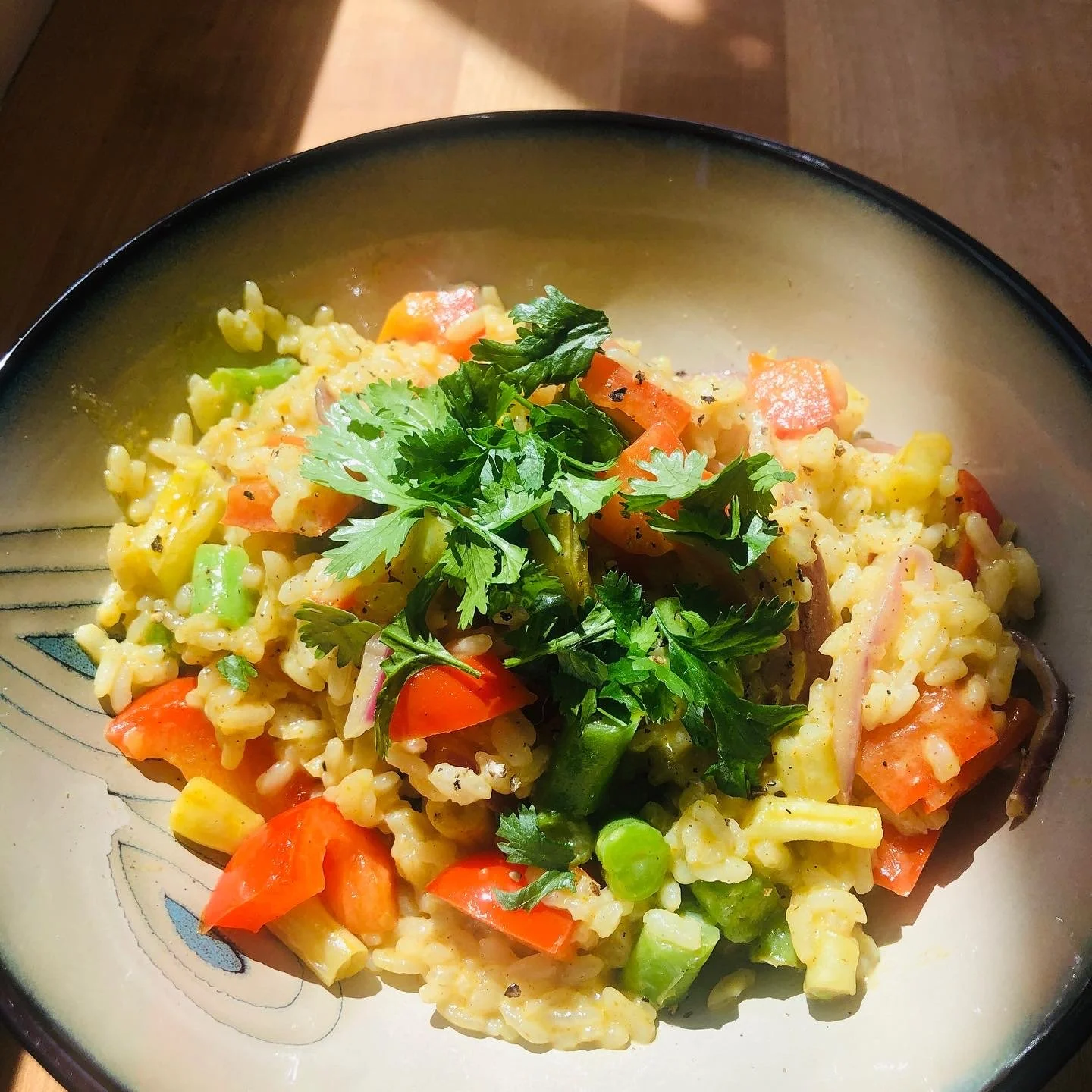
Cleansing Springtime Kitchari
Why Kitchari Is So Important in Ayurveda
Kitchari is considered a foundational healing food because it supports the body’s natural intelligence while giving the digestive system a rest.
Core Ayurvedic reasons:
Highly digestible: Mung dahl and white basmati rice are among the easiest foods to digest, allowing Agni (digestive fire) to strengthen.
Tri-doshic: When prepared with the right spices, kitchari balances Vata, Pitta, and Kapha.
Complete nourishment: The combination of grain + legume creates a complete protein that builds and repairs tissues without heaviness.
Gentle detoxification: Because digestion is effortless, the body can redirect energy toward cleansing and restoring balance.
Sattvic in nature: Pure, simple, grounding, and calming—ideal for clarity and emotional steadiness.
Kitchari is both food and medicine, making it the cornerstone of Ayurvedic cleansing, seasonal resets, and digestive healing.
Sattvic Qualities of Kitchari
Kitchari is considered one of the most sattvic foods in Ayurveda, meaning it promotes clarity, peace, and harmony in both body and mind.
Sattvic qualities include:
Purity: Made from whole, unprocessed ingredients.
Lightness + nourishment: Easy to digest while still deeply sustaining.
Calming to the nervous system: Warm, soft, and grounding.
Supports mental clarity: No overstimulation, no heaviness.
Balances prana: Encourages a steady, clear flow of life force.
This makes kitchari ideal for meditation, healing, and any time the body-mind needs to reset.
Why Cleansing Kitchari Is Ideal in Spring
Spring is Kapha season—cool, damp, heavy, and slow. The body naturally accumulates mucus, congestion, sluggish digestion, and lethargy during this time. Ayurveda recommends foods that are warm, light, drying, and gently stimulating to counterbalance these qualities.
Kitchari prepared with heated spices becomes the perfect seasonal antidote.
Seasonal energetics of Spring:
Kapha increases with melting snow, moisture, and heaviness.
Digestion becomes slower and more sluggish.
The body is ready to release accumulated toxins from Winter.
Warm, spiced foods help liquefy and move stagnation.
A cleansing kitchari aligns with all of these needs.
Cleansing Springtime Kitchari
Kitchari is considered a foundational healing food because it supports the body’s natural intelligence while giving the digestive system a rest.
Ingredients
- 1/2 teaspoon cumin seeds, whole
- 1/2 teaspoon brown mustard seeds, whole (omit if you have a pitta imbalance)
- 1/4 teaspoon freshly ground black pepper
- 1 teaspoon ginger powder
- a pinch of Hing Asafetida (Omint if Pitta imbalance)
- 5 ½ cups water
- 1 tablespoon sunflower oil
- 1 cup mung dal
- 1 medium carrot, thinly sliced
- 2 celery stalks, thinly sliced
- 1 cup chopped cauliflower
- 1/2 cup chopped Asparagus
- 2 cups chopped baby spinach leaves (substitute with kale if Pitta)
- 1/2 cup quinoa
- 1 lemon, juiced (Lime if Pitta)
- 1/2 teaspoon pink Himalayan salt
- Chopped cilantro, for garnish
Instructions
- Measure the spices and the water. Set aside.
- Warm the sunflower oil over medium heat in a large saucepan. Once hot, add in the cumin seeds, brown mustard seeds, and black pepper. Sauté for 2 minutes, stirring frequently.
- Add in the Hing Asafetida, and ginger. Sauté for 30 seconds, stirring constantly.
- Add in the water and increase the heat to high. Cover the pan and bring it to a boil.
- Once boiling, reduce the heat to medium and add in the mung dal. Stir well and cover the pan, leaving a large crack in the lid. Cook for 15 minutes stirring half way.
- As the beans are cooking, begin to slice up the carrot, celery, cauliflower, asparagus, and spinach.
- After 15 minutes, add the quinoa, carrot, celery, cauliflower, and asparagus to the pot. Stir well and cover, keeping the lid slightly cracked. Cook over a medium-low heat for 10 minutes, stirring every 3 to 4 minutes. If the kitchari becomes too thick, carefully add more water by the quarter cup.
- After 10 minutes, add in the spinach, reduce the heat to low, cover the pan completely, and cook for 5 minutes. Stir every minute to avoid the kitchari from sticking to the bottom of the pan.
- Turn off the heat, but leave the pan on the hot burner. Add in the fresh lemon juice and salt. Stir well. Cover the pan and let the kitchari sit for a few minutes to allow the flavors to harmonize.
- Serve into individual bowls. For added Kapha-reducing effects, garnish generously with cilantro, extra lemon juice, and black pepper.
Nutrition Facts
Calories
629Fat
11 gSat. Fat
1 gCarbs
100 gFiber
17 gNet carbs
83 gSugar
6 gProtein
35 gSodium
711 mgCholesterol
0 mg